

On 27 and 28 October 2026, the CLEPSYDRA project held its Final Conference and field visit in Cartagena, Spain, bringing together project partners, researchers, water management authorities and stakeholders to share project results, exchange knowledge and discuss groundwater management challenges across the Mediterranean region.
The event took place at the headquarters of the Community of Irrigators of Campo de Cartagena and combined technical presentations, a Groundwater Exhibition, a roundtable discussion and a field visit to the Campo de Cartagena pilot area.
Presenting CLEPSYDRA’s results and achievements
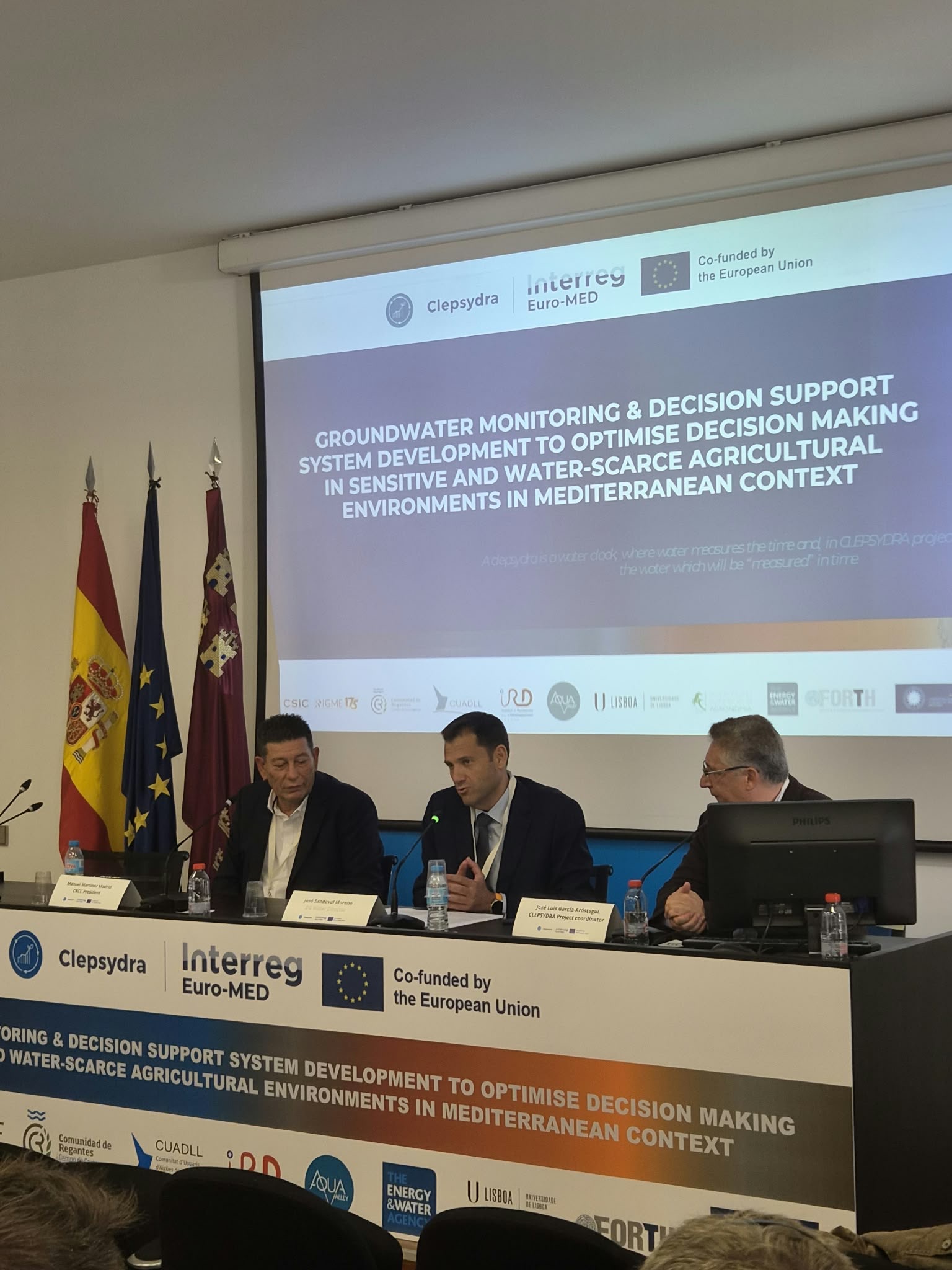
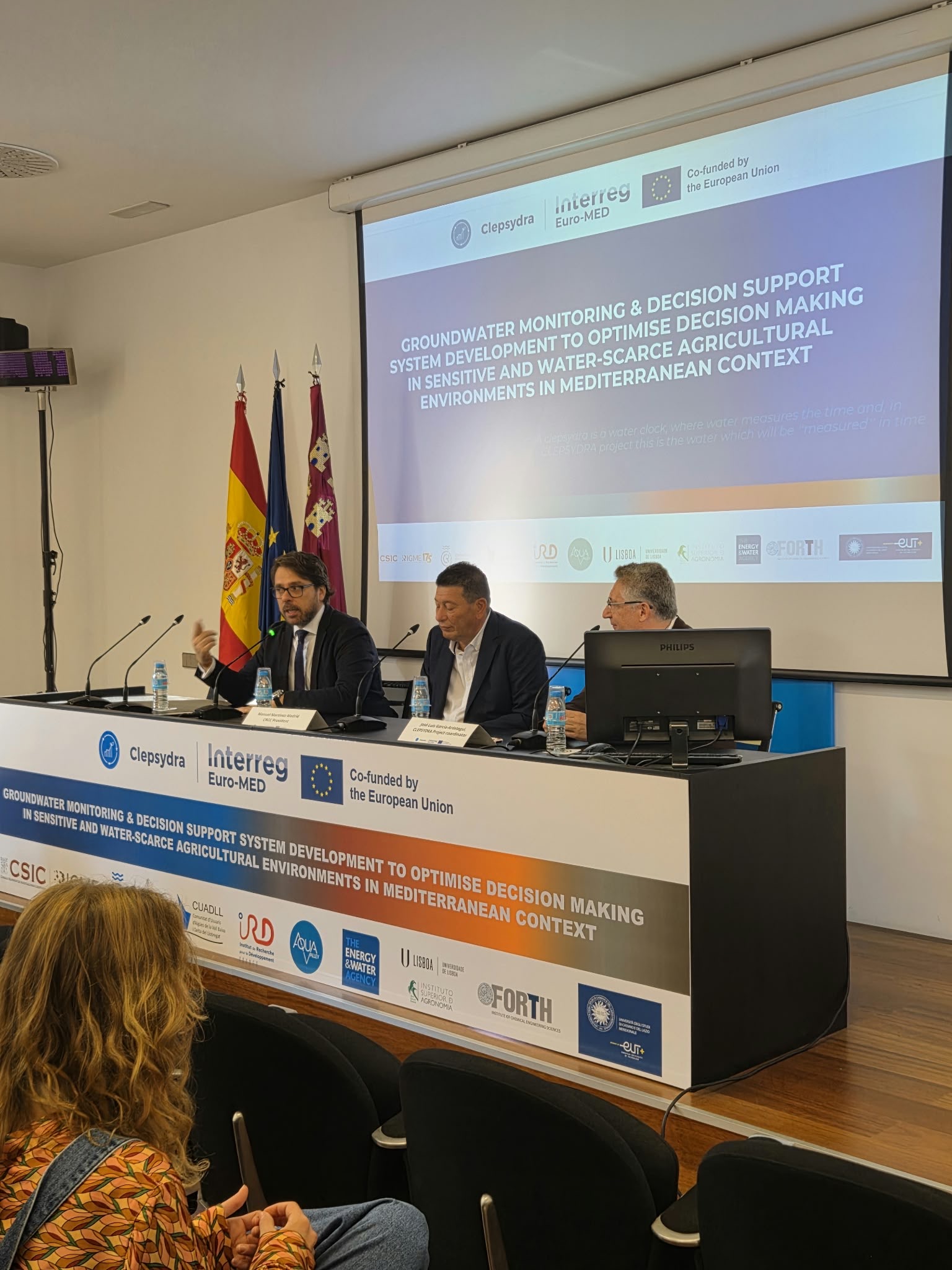
The conference opened with welcoming remarks from Manuel Martínez, President of the Community of Irrigators of Campo de Cartagena; Álvaro Valdés, Councillor of Cartagena City Council.; and José Luis García-Aróstegui, CLEPSYDRA Project Coordinator.
The opening was followed by an overview of CLEPSYDRA’s objectives, main achievements and progress towards its official closure in March 2027.
During the technical sessions, project partners presented the work carried out across the four Mediterranean pilot sites:
- Campo de Cartagena (Spain): monitoring of saturated and unsaturated zones.
- Llobregat (Spain): groundwater quality, aquifer recharge and seawater intrusion.
- Tagus / Quinta da Cholda (Portugal): fertigation, nitrate transport and groundwater monitoring.
- Malta: groundwater recharge, nitrates and the unsaturated zone.
The conference also featured a presentation of the CLEPSYDRA Decision Support System (DSS) by the University of Cassino, followed by a session on socio-hydrogeological case studies presented by the French National Research Institute for Sustainable Development (IRD).
Groundwater Exhibition: making groundwater visible
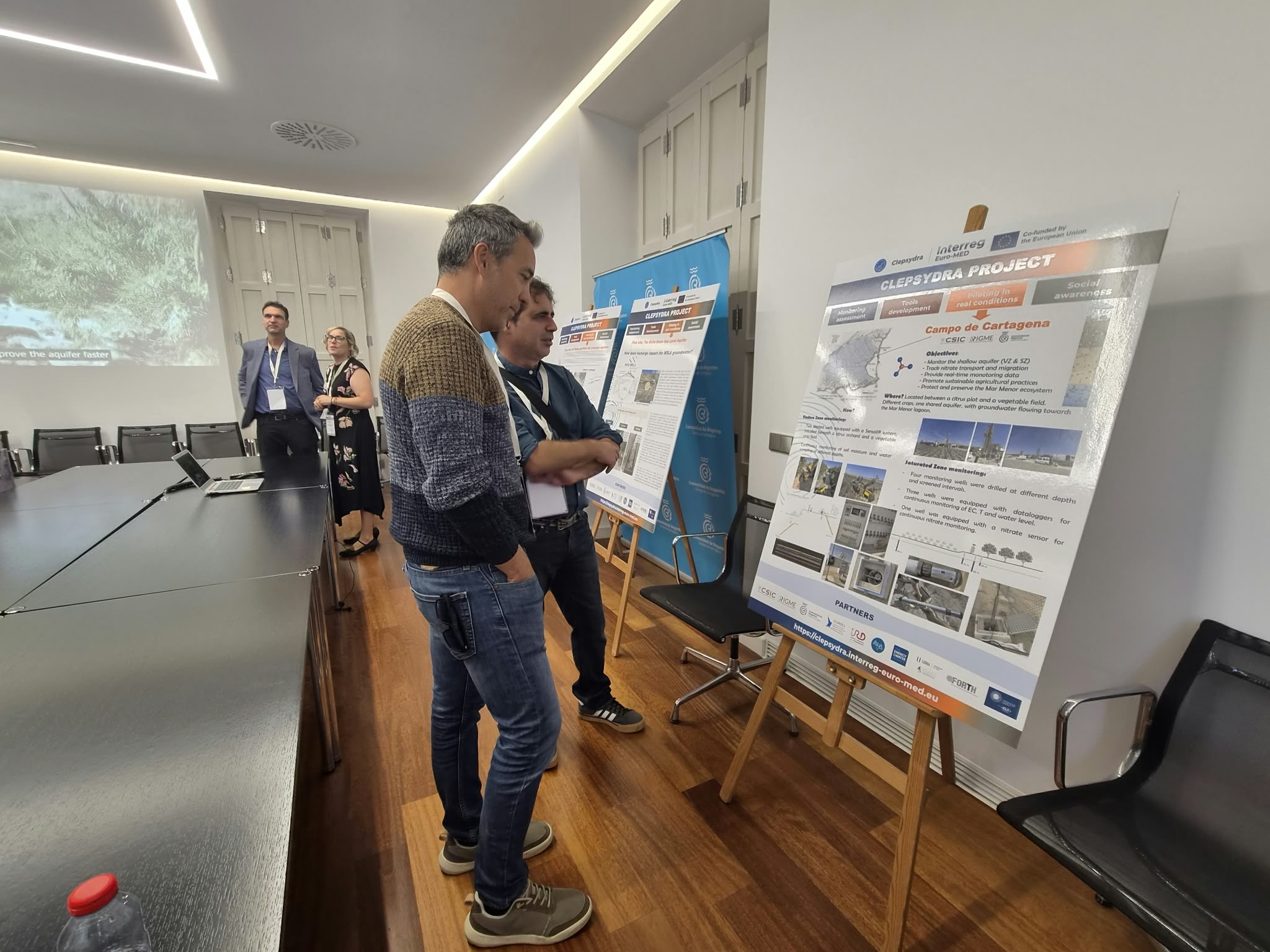
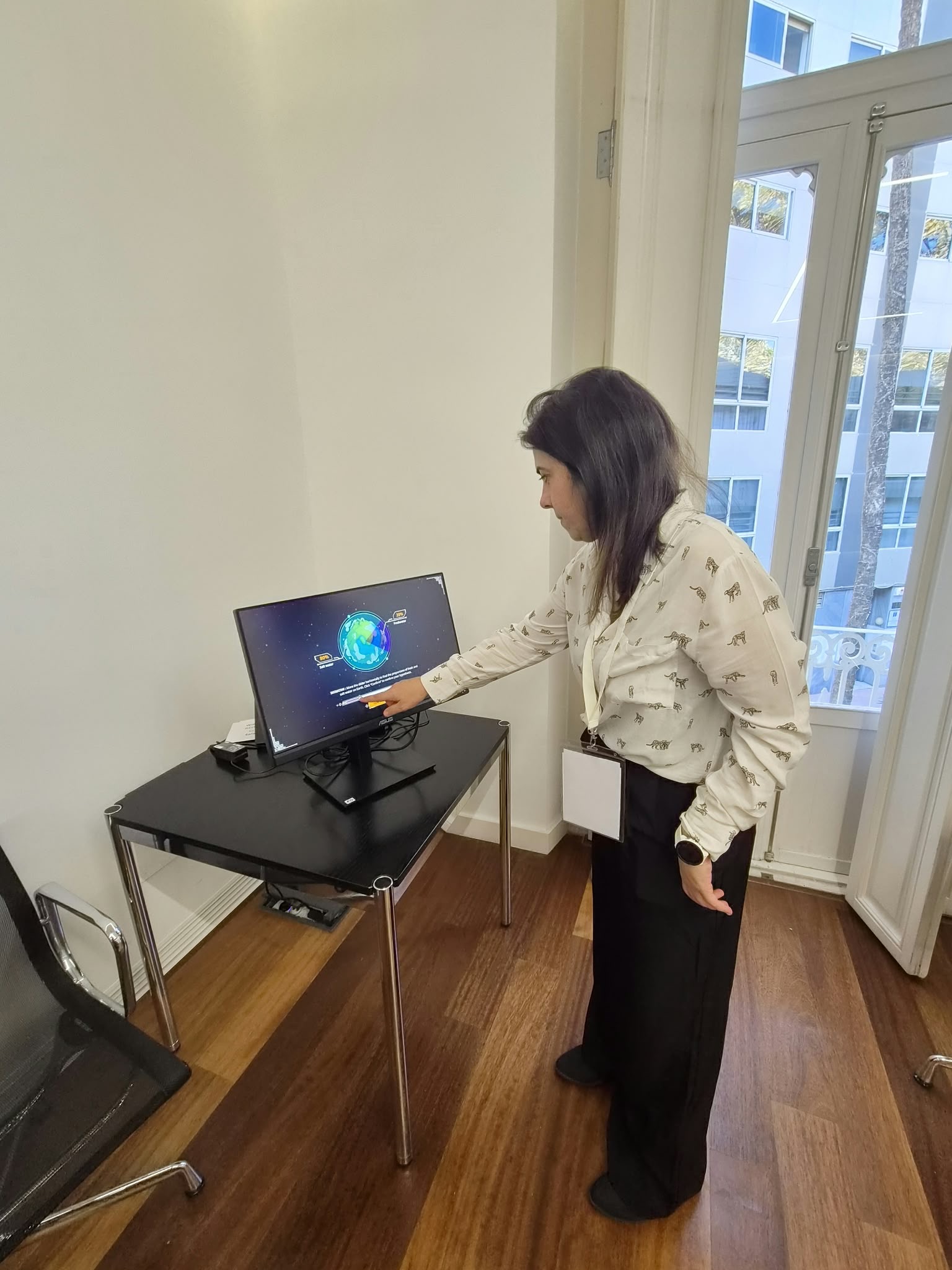
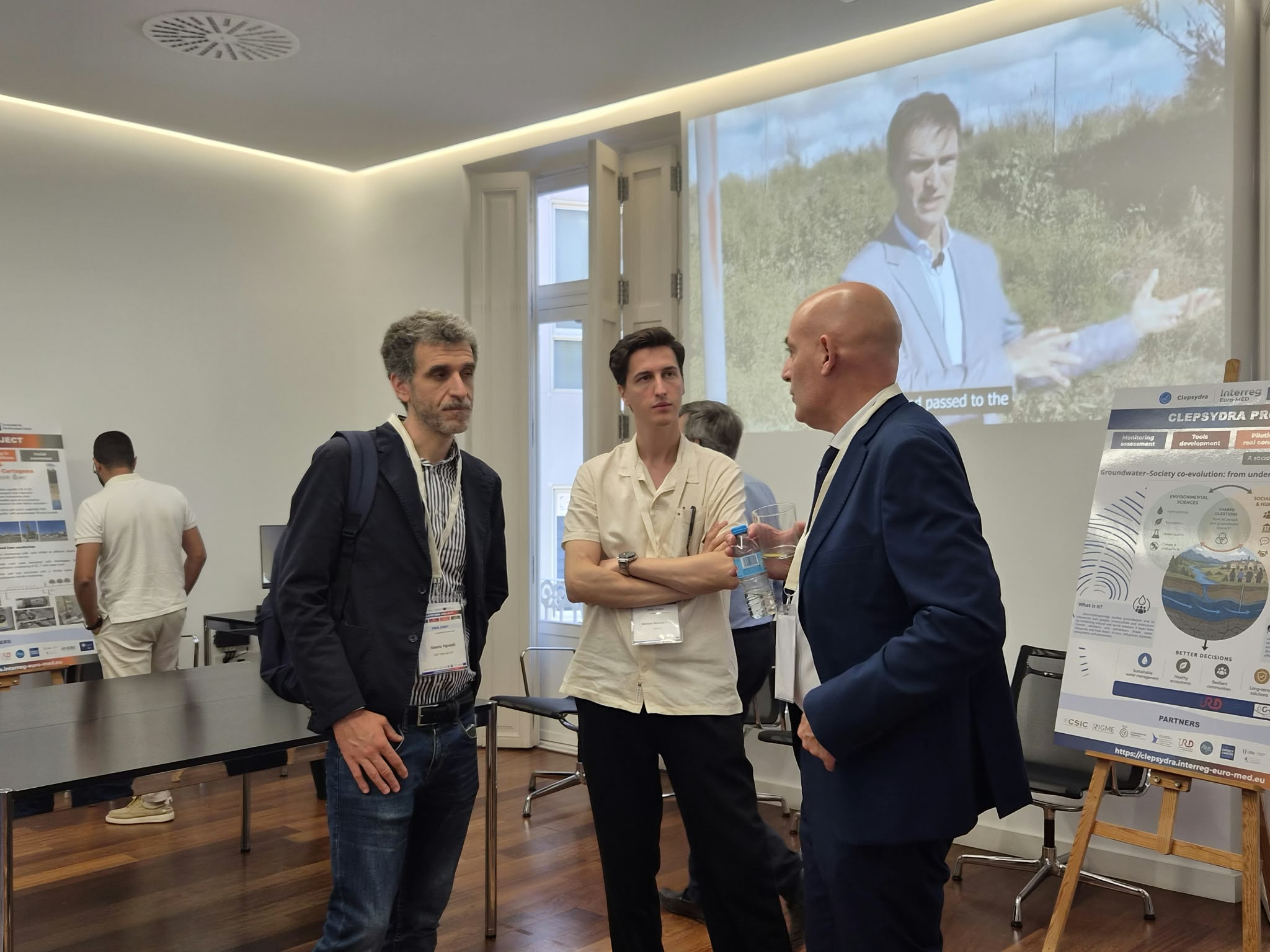
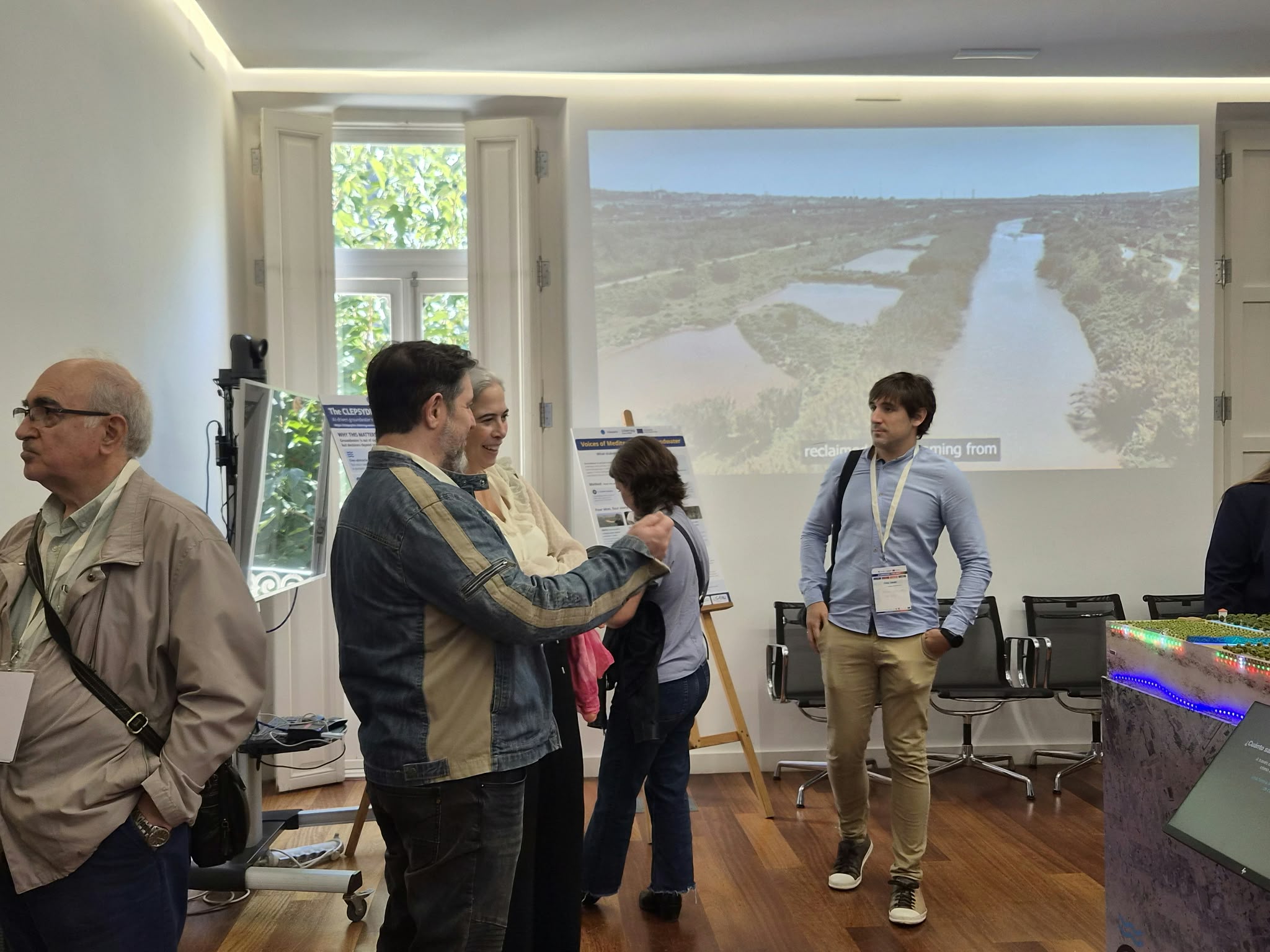
One of the highlights of the event was the Groundwater Exhibition, which remained open throughout the conference.
The exhibition showcased aquifer demonstrations, groundwater monitoring equipment, project results, pilot site stories, multimedia materials and the CLEPSYDRA Decision Support System.
Participants also had the opportunity to take part in a guided visit, exploring the different exhibition stations and demonstration materials.
Through practical and visual resources, the exhibition aimed to bring groundwater science closer to participants, highlighting how monitoring technologies and scientific knowledge contribute to a better understanding and management of aquifer systems.
Roundtable on agriculture and groundwater-dependent ecosystems
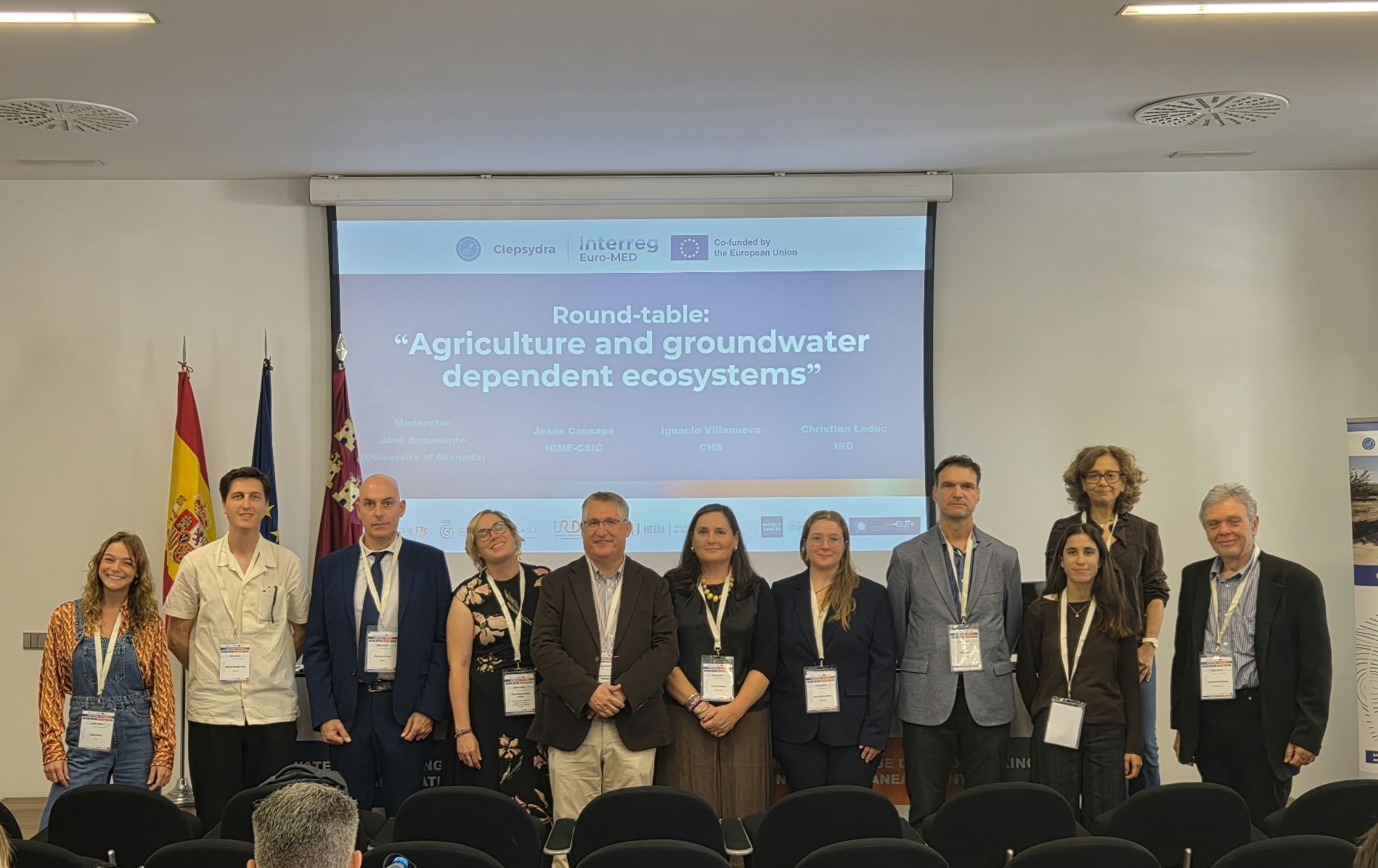
Following the exhibition, the conference continued with a roundtable entitled “Agriculture and Groundwater Dependent Ecosystems”, moderated by José Benavente from the University of Granada.
The discussion brought together Jesús Causapé (IGME-CSIC), Ignacio Villanueva (Segura River Basin Managing Authority) and Christian Leduc (IRD).
The session addressed the relationship between agricultural activities, groundwater resources and groundwater-dependent ecosystems, providing an opportunity to exchange scientific and management perspectives on the challenges facing Mediterranean water resources.
The conference concluded with a closing session featuring José Sandoval, Director General for Water of the Government of the Region of Murcia.
Field visit to the Campo de Cartagena pilot site
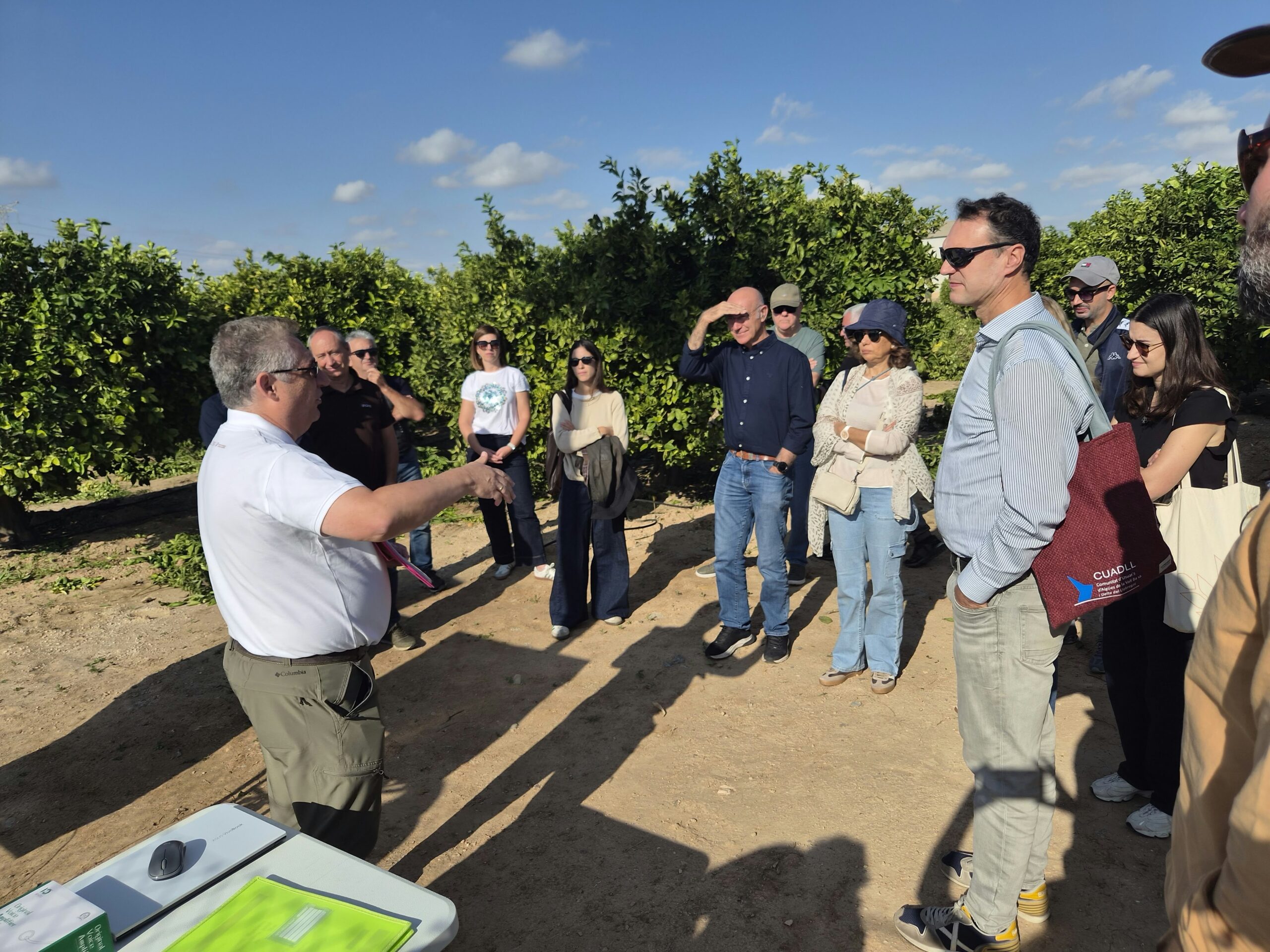
On 28 October, CLEPSYDRA partners participated in a technical field visit to the Campo de Cartagena pilot area.
The visit focused on the local aquifer system, agricultural water use, groundwater quantity and quality challenges, and the monitoring activities developed within CLEPSYDRA, including their connection with the Mar Menor.
The programme also included a visit to GREGAL, an agricultural production company, where participants explored the importance of groundwater for agricultural activities.
The field visit provided a practical complement to the conference sessions, connecting the project’s technical work with groundwater management challenges in the local agricultural context.